01
中文
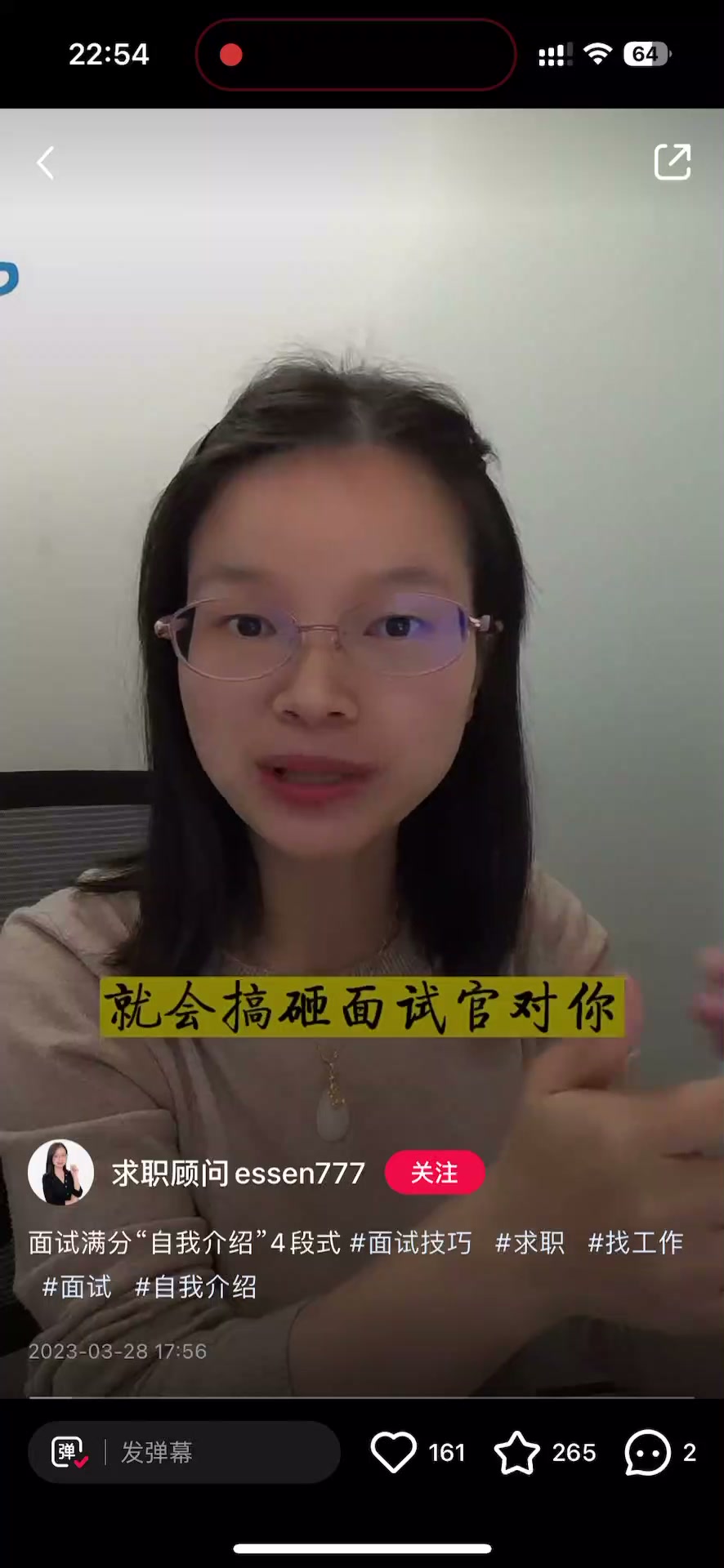
开场的自我介绍太重要了,讲不好就会搞砸第一印象。
EN
Your opening self-introduction matters so much—botch it and you've ruined the first impression.
表达提示搞砸:botch
Scene English · 视频学习
Stop Repeating Your Resume: A Four-Step Story for Self-Introductions
🎧 语音讲解
The Resume-Reciting Trap
情境讲者指出自我介绍的最大误区是把简历复述一遍,近九成学员讲不好自我介绍。
开场的自我介绍太重要了,讲不好就会搞砸第一印象。
Your opening self-introduction matters so much—botch it and you've ruined the first impression.
表达提示搞砸:botch
自我介绍最大的误区,就是把简历简单的再复述一遍。
The biggest mistake is simply reciting your resume all over again.
表达提示复述一遍:recite all over again
如果等于复述简历,那面试官直接看简历就好了。
If it's just a resume recital, the interviewer could simply read your resume instead.
表达提示直接看简历:simply read your resume
复述简历 → 零信息增量
自我介绍 = 印象管理的开场
Why Interviewers Ask for an Intro
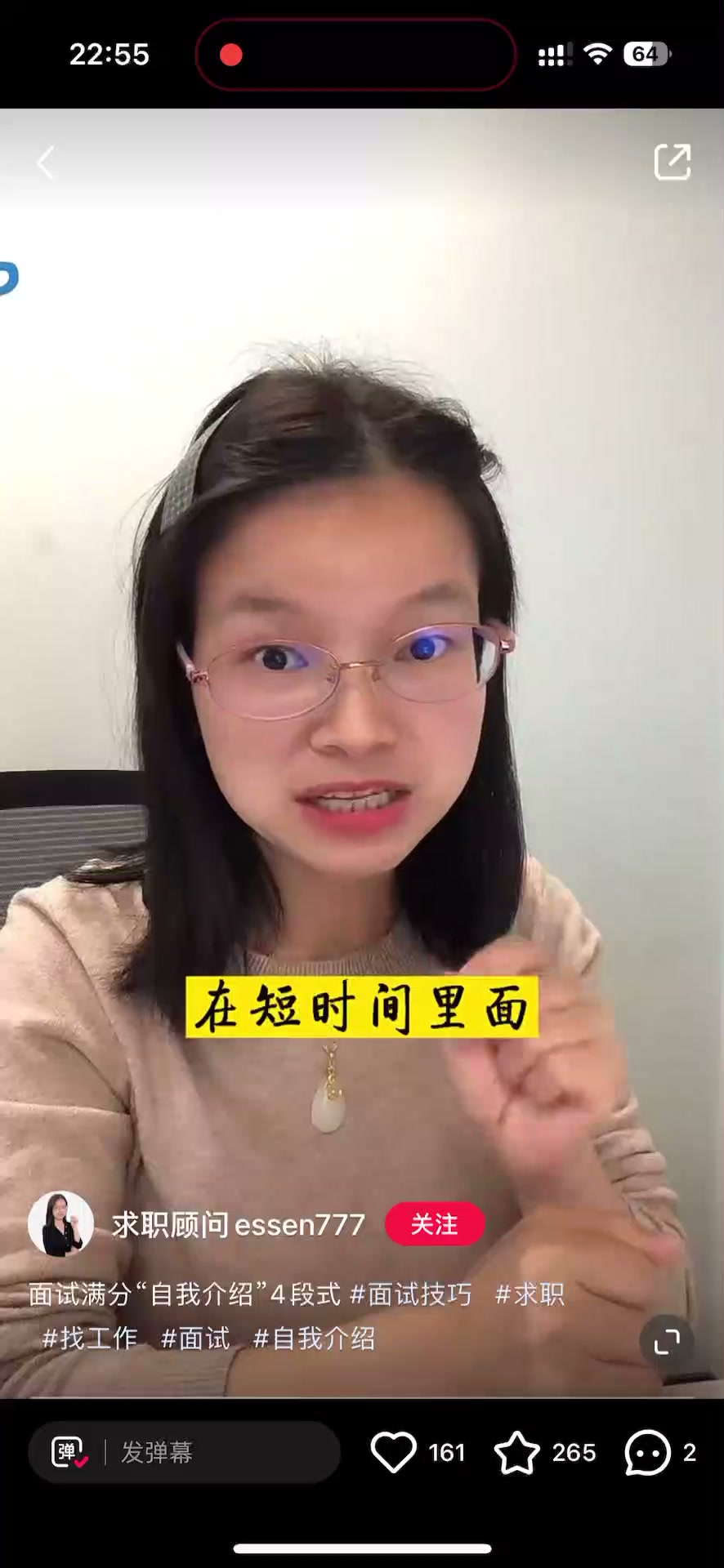
情境讲者说明面试官要自我介绍的真正目的:热身与建立第一印象。
面试官要你自我介绍的目的有两个。
Interviewers ask for a self-introduction for two reasons.
表达提示目的有两个:two reasons
一是面试热身,把双方拉到面试的风格里面去。
First, to warm up and set the tone of the interview.
表达提示面试热身:warm up
二是通过你的自我介绍,建立对你的第一印象。
Second, to form a first impression of you based on your intro.
表达提示第一印象:first impression
热身 → 决定对话的节奏
第一印象 → 决定听下去的意愿
The Four-Step Story Framework
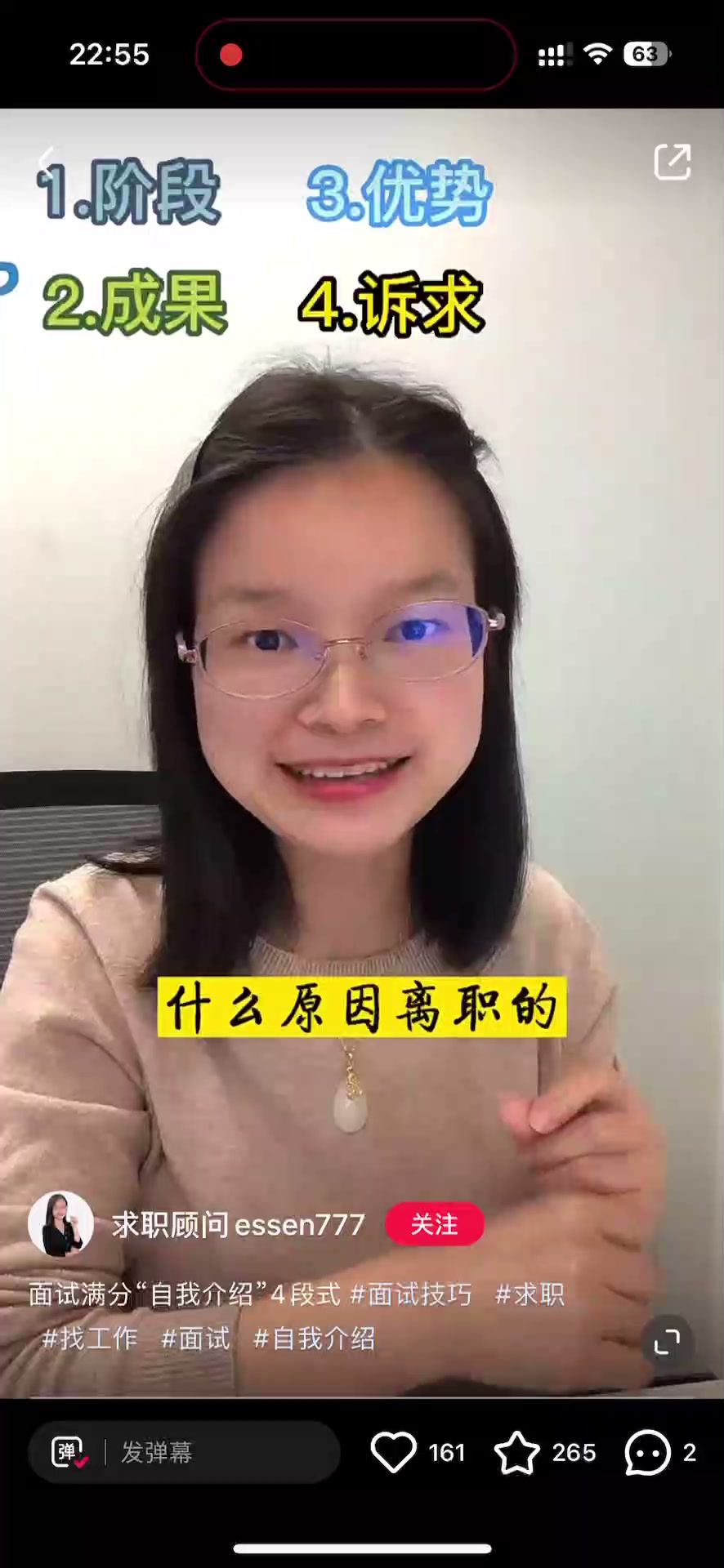
情境讲者给出抓住面试官注意力的四步结构:分阶段、讲产出、总结优势、说清诉求。
讲好一个生动的、关于我是谁的故事,才能抓住面试官注意力。
A vivid story about who you are is what grabs the interviewer's attention.
表达提示抓住注意力:grab attention
把履历分成几个阶段,讲每个阶段的重要产出和个人成长。
Break your career into stages, then highlight the key results and personal growth in each.
表达提示重要产出:key results
总结核心优势,并讲清楚你的求职诉求。
Summarize your core strengths, and make your job-seeking motivation clear.
表达提示求职诉求:job-seeking motivation
四步 = 故事的四个段落
好自我介绍 → 让人想继续了解
表达「分阶段讲履历」
表达「讲重要产出」
表达「总结核心优势」
表达「讲清求职诉求」
recite 用于正式场合,口语用 walk through / repeat。
hook 更口语,表达「抓住注意力」。
产出用 key results / deliverables。
求职诉求用 motivation,不是 appeal。